Queer Places:
24 Bedford Square, London WC1B 3HN, UK
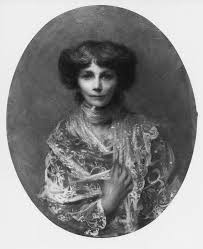 Mary Frances "Fanny" Prothero (née Butcher, April 10, 1854 - April 9, 1934) was born in 1854. She became a prominent figure within elite intellectual circles in late-Victorian and Edwardian
Britain, closely tied to academic life in Cambridge and artistic circles in London.
Mary Frances "Fanny" Prothero (née Butcher, April 10, 1854 - April 9, 1934) was born in 1854. She became a prominent figure within elite intellectual circles in late-Victorian and Edwardian
Britain, closely tied to academic life in Cambridge and artistic circles in London.
Daughter of Samuel Butcher, bishop of Meath, and sister of Samuel Henry Butcher and of
John George Butcher, later Lord Danesfort, both were members of the
Cambridge Apostles. She married the historian and writer Sir George Walter Prothero (1848–1922), who served as president of
the Royal Historical Society. Within academic society, Fanny was known as a more reserved participant in large groups.
Louise Creighton noted of her during her early days in Cambridge that "Fanny Prothero never really liked it; she at that time
always wanted intimate talk with one person".
Later in life, she developed a famously close friendship with the novelist Henry James. James held a deep affection for both
George and Fanny Prothero, affectionately describing Fanny as "a little Irish lady … full of humour and humanity and curiosity and interrogation—too much interrogation". She
was part of James's inner circle and famously helped nurse him during his final illness. Fanny Prothero died in 1934 at the age of 80.
Fanny Prothero was one of the twelve founding members of the Ladies Dining Society, an exclusive and pioneering
discussion group active in Cambridge between 1890 and 1914.
Formed by Louise Creighton and Kathleen Lyttelton, the club brought together academic wives and intellectuals at a time
when women were largely excluded from college high tables. Members met regularly to discuss politics, literature, and social issues, serving as a vital intellectual network
that overlapped heavily with the early women's suffrage movement and campaigns for women's higher education.
Alongside Fanny Prothero, the group included prominent figures such as Ellen Darwin,
Ida Darwin, Maud Darwin, Caroline Jebb,
Mary Paley Marshall, Eleanor Sidgwick,
Margaret Verrall, Eliza von Hügel, Mary Ward,
Louise Creighton, and Kathleen Lyttelton.
There is no historical evidence or documentation indicating that Fanny Prothero herself had any LGBTQ links, identity, or non-normative sexual orientation; her life and
social standing were firmly rooted in a traditional heterosexual marriage to George Prothero.
However, connections to queer history and homosocial/literary networks surface primarily through her immediate social circles:
Fanny was one of the closest confidantes of Henry James, a writer whose personal life, intense homosocial bonds with men, and complex expressions of same-sex attraction
have been the subject of extensive modern queer literary studies.
Intellectual and academic groups of this era—including the broader networks surrounding Cambridge academics, Newnham College figures, and later the Bloomsbury group
figures with whom her associates interacted—frequently contained individuals navigating diverse gender roles and same-sex relationships. However, specific documentation
linking Fanny Prothero personally to LGBTQ histories does not exist in the available biographical record.
References:
- Kennedy Smith, Ann. "The Ladies Dining Society." Oxford Dictionary of National Biography, 9 May 2018.
- Wikipedia Contributors. "Ladies Dining Society." Wikipedia, The Free Encyclopedia.
- Royal Historical Society Blog. "New Catalogue for the Society's George W. Prothero papers (1866–1922)." January 2022.
- Christie's Fine Printed Books & Manuscripts. Auction records and provenance notes regarding George and Mary Frances Prothero, featuring authorial inscriptions by Henry James.
- Creighton, Louise. Memoirs and recollections regarding early Cambridge academic circles and social dynamics, referenced via secondary biographical compilations (e.g., James Thayne Covert, A Victorian Marriage: Mandell and Louise Creighton).
Support this project
This website is a passion project researched, developed, and funded entirely by me. If you find the content valuable and would like to help support the ongoing research and hosting costs, any contribution is deeply appreciated.
Thank you for keeping this independent resource alive!
My books on Amazon: Elisa Rolle's books
BACK TO HOME PAGE